First published version.
This is part of our work on AI Virtual Spokesperson.
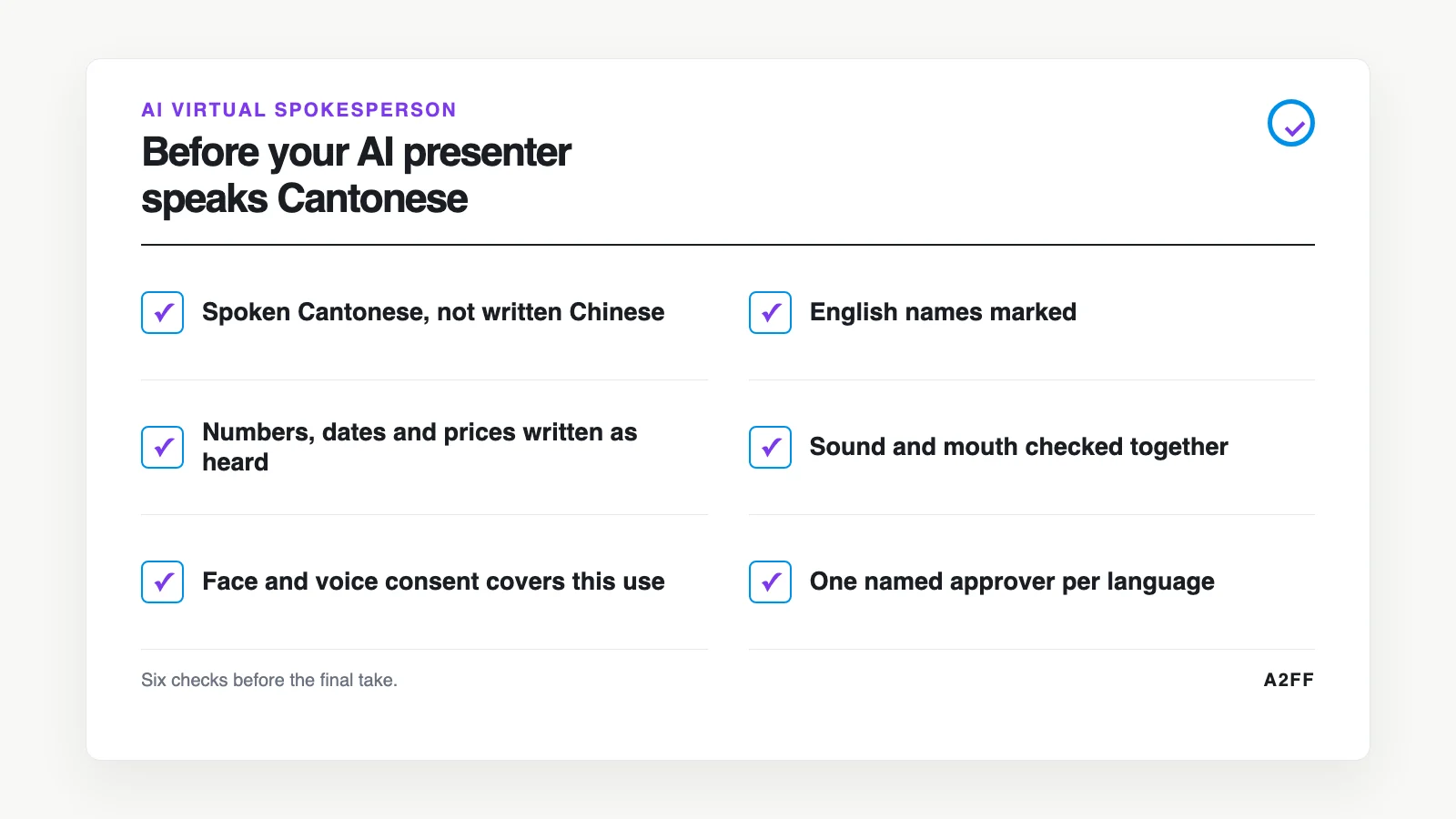
An AI presenter can speak Cantonese, but the script mostly decides how it sounds. In our own Cantonese takes, most of what went wrong came from the words on the page: written Chinese, an English acronym and a number. In our view, a brand should check six things before the video goes out: spoken Cantonese in the script, how each English word is said, numbers and dates written as they are heard, sound and mouth checked together by a Cantonese listener, consent for the face and voice, and one named approver for the final take.
As of 5 October 2026: our examples come from A2FF's September 2026 Cantonese takes and production notes, plus our October frame and sound check of the live clip. We quote two texts from the Office of the Privacy Commissioner for Personal Data (PCPD), read on its own pages that day. This article is not legal advice.
For a brand assessing Cantonese text to speech or a Cantonese AI voice, the first check is the script: written Chinese can make the presenter sound as though it is reading a notice. Write the lines the way people in Hong Kong speak.
Spoken Cantonese and written Chinese differ in words and grammar: 係, not 是; 喺, not 在; 嘅, not 的. Our demo presenter, Iris, is a fictional character created with AI. Her Mandarin line says 「我是 Iris」 and her Cantonese line says 「我係 Iris」. We also told the voice, in the instructions sent with the line, not to read it in a written-Chinese announcer's style.
An earlier version of her line ended 「幫你嘅品牌發聲」. We changed 發聲 to 「講嘢」 and remade the take. In our reading, 講嘢 is the word a person would actually say. Our production notes also flagged that 發聲 and 發生 sound the same in Mandarin but not in Cantonese, so a voice could swap them (the next section explains why). We did not record whether it did.
In our view, a brand should write the script in spoken Cantonese first, then read it aloud to check it.
Unless the script says how each English word is spoken, the voice may read it as Chinese characters or run the letters together.
Hong Kong speech mixes English into Cantonese, so a brand script will too. Our production notes record that in an earlier take of our own reel, the letters "G.E.O." came out as one syllable, close to "GEV", and that four words were misread in that one take. The notes explain the misread Chinese words as the voice taking the Mandarin reading of the characters. They record it from that one take, so we do not claim it for every voice.
We wrote a pronunciation note for every English word. Our note says Iris is English and has two syllables; the voice should not spell it out or read it as Chinese characters. G.E.O. is read letter by letter. And where a Chinese word was misread, the final script used the English word the audience already says: 網站連結 (website link), misread in that take, became "link".
In our view, list every brand name, product name and acronym, with how each one is said, before production starts.
Write each one the way it should be heard, then listen to every one, because a number is easy to misread and costly to get wrong.
In the same earlier take, a percentage written in Chinese characters came out as a different word, so we rewrote the line to say it another way. That is our only first-hand example of a number. None of our clips carries a date or a price, so the rest is advice, not a test result.
Our advice: write dates as they are said, for example 「十月二十三號」 rather than 2026年10月23日. Write the currency and the amount as they should be heard. And keep prices, rates and legal terms in on-screen text that someone has checked, not only in the voice.
In our view, a Cantonese listener should watch and listen at the same time, at the size the video will be seen. We know of no automatic score that confirms the mouth made the right Cantonese syllable.
We made the earlier Iris line on two video engines. On one, several frames we checked at six frames a second show the lips smeared, twisted or pressed out of shape. We chose the other engine by ear, and the clip on our page is a remake on that engine with the new line.
We also measured the live Iris clip, about six seconds long, frame by frame against the sound. The lips close as the sound ends. But in two places the mouth opens about 0.2 to 0.4 seconds before the sound: once at the start, where our production notes say the breath before the first word was silenced in the edit, and once before the second sentence. We did not check whether a viewer would notice it at the clip's playing size, about 480 pixels wide. Nor did we check tones or each syllable.
We found these two gaps by measuring frames against the sound, not by watching. In our view, a brand should check each language version separately, at the playing size and with the sound on, and listen for tones where English joins Cantonese.
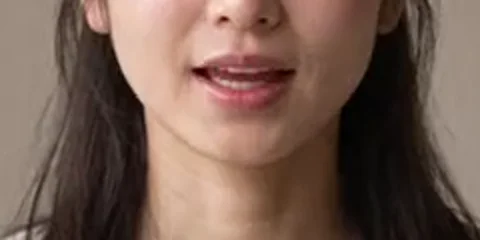 0.33 s
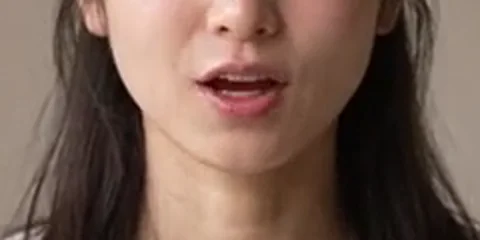 2.33 s
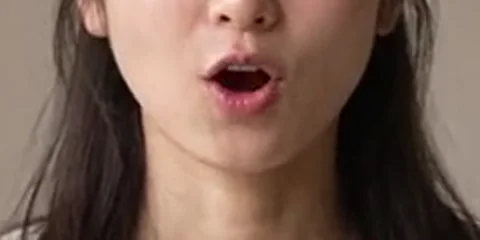 2.50 s
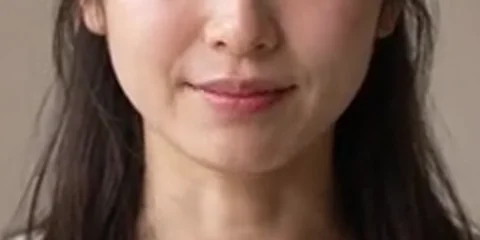 5.17 s
In our view, the person whose face and voice are used should agree in writing to this use, unless the presenter is a fictional character; one named approver should sign off the final take in each language.
For a presenter based on a real person, check that the signed likeness and voice agreement covers the proposed video and market. Our AI Virtual Spokesperson page explains the consent process.
In our view, two PCPD texts also matter here. Its guidance of August 2020 lists "voice pattern" and "facial images" as examples of biometric data, and writes that data users "are not allowed to use personal data collected for a new purpose without the express and voluntary consent of the data subjects, unless any exemption under Part 8 of the Ordinance is applicable". That guidance is about biometric data, mainly used to identify or verify people; applying it to a presenter built from a recording is our reading. In a March 2026 article, the Privacy Commissioner wrote that using personal data to create deepfake materials "may contravene Data Protection Principle (DPP) 3 of the PDPO if it goes beyond the original purpose of data collection" (the PDPO is Hong Kong's Personal Data (Privacy) Ordinance). That article is about deepfakes, not consented presenters. Our reading of both: do not treat a recording made for one campaign as consent for the next; check what the signed agreement covers. Your legal adviser can tell you which rules apply to your video.
In our view, the approver is a named person who has watched the final take with the sound on. A sign-off that says "the team approved it" names no one.
The script reads as a person would say it (係, 喺, 嘅), checked aloud
Every brand name, product name and acronym has a note on how it is said
Each one written as it is said; prices, rates and legal terms also on screen
A Cantonese listener watched each take with sound, at the playing size, tones included
A signed likeness and voice agreement covers this video and this market, or the presenter is a fictional character labelled as one
The final take is signed off by a named person who watched it
It needs its own script. Cantonese and Mandarin use different words, so a Mandarin script read in Cantonese sounds written, not spoken. Our demo presenter's two lines show the difference: the Cantonese line says 「我係 Iris」 where the Mandarin line says 「我是 Iris」, and 「講嘢」 where it says 「发声」.
In our view, subtitles should follow what is said, so viewers who read and listen get the same words. The captions on our own reel use the same spoken Cantonese words as its script. If a channel needs written Chinese subtitles, approve them as a separate text.
Yes. Each script brings new names, numbers and words that the voice has not read before. In our work, the words we had to change were specific to each script.
As of 5 October 2026: we read each source below on the issuer's own page that day.
A2FF writes the script with your team in spoken Cantonese, marks how each English term and number is said, and has every take checked by sound and mouth before your approver signs it off. A2FF makes the video as part of [AIGC Content Production](/services/aigc/).
See a Cantonese presenter built from your approved script