AI 搜尋優化:網頁怎樣寫,才有機會被 AI 引用?

作者 A2FF Digital發佈於 閱讀時間 7 分鐘

首次發佈版本。

重點摘要

  1. AI 回答可以用兩種方式為您帶來生意:引用您的網頁,或者提到您的品牌。我們認為,AI 回答會不會提到您的品牌,主要看其他網站怎樣介紹您;AI 回答會不會引用您的網頁,就看您怎樣撰寫和發佈網頁,這部分由您掌握。您可以先讓 Google、ChatGPT、Gemini 和 Perplexity 找得到您的網頁,在網頁開首幾句回答問題,再加入您自己整理、讀者可以查證的資料。AI 回答引用您網頁的次數,要和搜尋排名分開記錄。本文列出十項檢查,以及 Google 說不用做的事。

這是我們 SEO 及 GEO 服務的一部分;SEO 和 GEO 兩項工作,我們會一併處理。
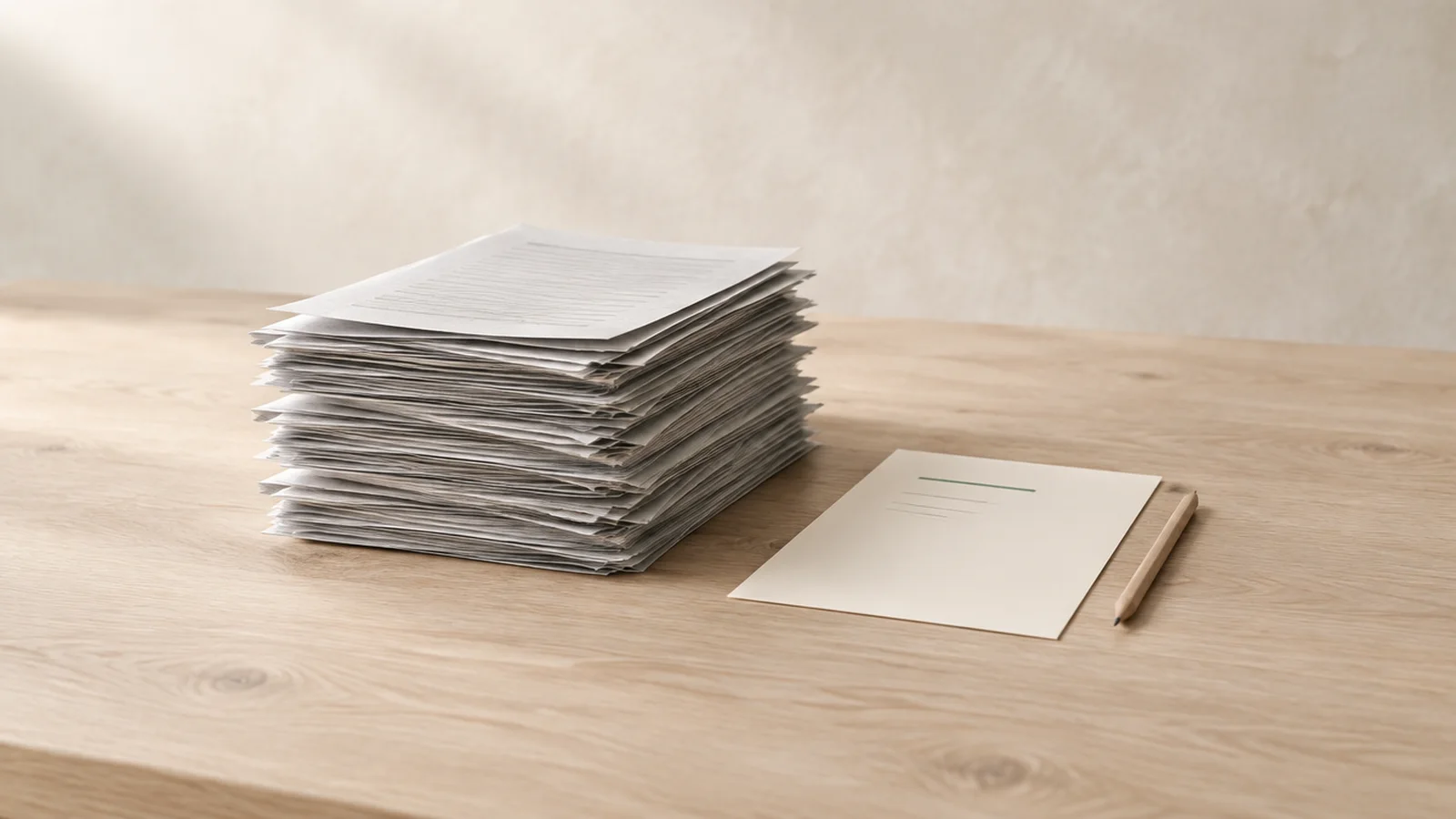
A tall stack of dense drafts beside one clean page whose first line is underlined in green: the short, clear answer is the one that gets used.

做 AI 搜尋優化時,如果您想 AI 回答引用您的網頁,先要讓 Google、ChatGPT、Gemini 和 Perplexity 找得到這一頁。然後在網頁開首寫出答案,再加入您自己整理、讀者可以查證的資料。之後,請定期查看 AI 回答有多常引用您的網頁。這個數字要和搜尋排名分開記錄,因為網頁排名高,不代表 AI 回答會引用您。

每個引擎找網頁的方法都不同。先說 Google:Google 要先收錄(indexing)您的網頁,網頁也要符合顯示搜尋結果摘要(snippet)的條件。Google 說,Google AI 摘要(AI Overviews)和 AI 模式(AI Mode)引用的網頁,要「indexed and eligible to be shown in Google Search with a snippet」(本文翻譯:已被收錄,並可在 Google 搜尋顯示摘要)(Google Search Central)。Google 較新的指南再加一項條件:「a site must be included in Search generative AI features in Search Console」(本文翻譯:網站必須在 Search Console 中設定為納入 Google 搜尋的生成式 AI 功能)(Google Search Central,2026)。這項設定預設為「包含」(Google Search Console 說明)。

a2ff.com 的 Search Console 設定畫面,Search generative AI 選了 Include。
a2ff.com 的 Search Console 畫面:「Google 搜尋生成式 AI」選了預設的「包含」。(2026 年 9 月 29 日)

其他引擎有自己的爬蟲(crawler)。OpenAI 說,OAI-SearchBot 負責為 ChatGPT 搜尋找網站;Anthropic 和 Perplexity 也說明,Claude-SearchBot 和 PerplexityBot 同樣為各自的搜尋服務找網頁。所以,您的網頁在 Google 排得高,也不保證 ChatGPT 會引用。請檢查 robots.txt 有沒有擋住這些爬蟲,再逐一測試各個引擎能否找到您的網頁。

做 AI 搜尋優化,要檢查哪十項?

前五項檢查搜尋引擎能否找到您的網頁。後五項是我們自己的做法,檢查網頁的答案是否清楚、內容是否您獨有,讀者又能否查證。

搜尋引擎讀得到嗎

  1. 用 Search Console 的 URL Inspection,查看 Google 有沒有收錄這一頁,以及這頁能否在搜尋結果顯示摘要。另外,請確認 nosnippet 設定沒有遮住您希望 AI 引用的文字。
  2. 到 Search Console 的「設定」,確認「Google 搜尋生成式 AI」仍選了「包含」。
  3. 打開網站的 robots.txt,檢查有沒有 Disallow 規則擋住 Googlebot、OAI-SearchBot、Claude-SearchBot 或 PerplexityBot 讀取這一頁。
  4. 答案要用文字寫在網頁上,不能只放圖片。Google 的建議之一,是「making sure that important content is available in textual form」(本文翻譯:確保重要內容有文字版本)(Google Search Central)。
  5. 如果 Search Console 的 Performance 報告有數據,請查看主要問題和相關問題各有多少曝光次數。平均排名只作參考,不要當成 AI 引用的門檻。相關問題如屬同一主題,就在這一頁一併回答。

答案值得引用嗎

  1. 在網頁開首兩三句就回答問題。趕時間的客戶會先讀這幾句。
  2. 每個 H2 小標題,都寫成客戶會問的問題。標題下第一句就是答案,單獨抽出來也看得明白。
  3. 每個數字都註明機構和年份,並附上研究原文或該機構網頁的連結。
  4. 寫別人沒有說過的話。一句話如果其他網站可以原封不動照搬,就不算是您的。
  5. 核對您的網頁和其他網站對您公司的介紹是否一致。然後問各個引擎「[公司名稱] 是做什麼的?」,再比較它們的答案。

問題Google AI 摘要是什麼?

含糊

AI 正在改變搜尋,企業應及早部署。

清楚

Google AI 摘要會在部分搜尋結果顯示 AI 整理的答案,並附上相關網頁連結。

後一句單獨拿出來也能回答問題,客戶和 AI 都用得上。

GEO 一詞由普林斯頓大學和印度理工學院德里分校的研究人員提出。他們的測試引擎根據 Google 首五個搜尋結果寫出答案。研究指出,修改網頁文字「can boost visibility by up to 40% in generative engine responses」(本文翻譯:在生成式引擎的回答中,可見度最多可提高 40%)(Aggarwal et al., KDD 2024)。

第 1 至 4 項檢查爬蟲能否讀取網頁和網頁上的文字,第 5 項看 Search Console 的數據,後五項則要靠編輯判斷。我們認為,後五項能令網頁對讀者更有用;您按這五項修改網頁後,網頁會否出現在 AI 回答中,仍要實際測試。

哪些 GEO 做法,Google 說不用做?

以下七種做法,前六種見於 Google 指南的「Mythbusting generative AI search: what you don’t need to do」(本文翻譯:破解生成式 AI 搜尋迷思:哪些事不用做)一節,第七種則見於同一份指南較前的部分(Google Search Central,2026)。這份指南只講 Google 搜尋;其他引擎的做法,您要另外查證。

不用做規定網頁字數Google:「There’s no ideal page length」(本文翻譯:沒有理想的網頁長度)
改做問題需要多長,就寫多長
不用做把內容硬切成細小片段Google:「no requirement to break your content into tiny pieces」(本文翻譯:不需要把內容拆成細小片段)
改做用清楚的小標題分段,方便讀者
不用做把 llms.txt 當作進入 Google AI 功能的方法Google 搜尋不會使用 llms.txt,這項說明於 2026 年 6 月加入
改做如您使用的其他服務會讀取 llms.txt,才考慮發佈。Google 說,其他服務或系統可能會使用這類檔案。
不用做特別加結構化資料(structured data)Google:「Structured data isn’t required for generative AI search」(本文翻譯:生成式 AI 搜尋不需要結構化資料)
改做一般搜尋已在用、而且與頁面相符的結構化資料,照樣保留
不用做專為 AI 改寫文章Google:「You don’t need to write in a specific way just for generative AI search」(本文翻譯:不需要只為生成式 AI 搜尋而用特定方式寫作)
改做直接回答客戶的問題
不用做花錢找人在網上提到您的品牌Google 說這樣做「isn’t as helpful as it might seem」(本文翻譯:未必如想像中有用)
改做爭取真實的商戶名錄、評價和文章
不用做每個相關問題各寫一頁Google 指出,這樣做若「primarily to manipulate rankings or generative AI responses in Google Search violates Google’s scaled content abuse spam policy」(本文翻譯:主要為了操控 Google 搜尋的排名或生成式 AI 回答,就違反 Google 有關大規模內容濫用的垃圾內容政策)
改做在同一頁答好主要問題和相關問題

Google 說,Google 搜尋不需要網站提供特別的檔案或標記,您也不需要專為 AI 而寫。如果您使用的其他服務會讀取 llms.txt,可以考慮發佈一個 llms.txt。寫網頁時,先把答案寫清楚。

怎樣查看 AI 有沒有引用您的網頁?

AI 回答引用您的次數,要和網頁排名分開記錄。Google 方面,您可以打開 Search Console 的生成式 AI 成效報告。Google 說,截至 2026 年 8 月 31 日,Google 已「rolled out these insights to all websites worldwide」(本文翻譯:向全球所有網站推出這些數據)(Google Search Console 說明)。報告按網頁、國家和裝置,列出您在 Google AI 摘要和 AI 模式的曝光次數,但不會顯示搜尋者問了什麼,也不會顯示 AI 怎樣回答。

至於 ChatGPT、Gemini、Perplexity 等其他 AI 搜尋,您就要自己提問查看。每月用同一組客戶問題,在同一地點提問,把完整回答和來源存起來。我們在香港測試 ChatGPT,在它的回答中共數得 247 個網站引用。其中 203 個網站,無論用問題本身還是對應的關鍵字在 Google 搜尋,都不在首十名(GEO 和 SEO 的分別:排名以外,怎樣出現在 AI 答案中?)。第一輪檢查,您可以先用我們的免費 GEO 檢查。
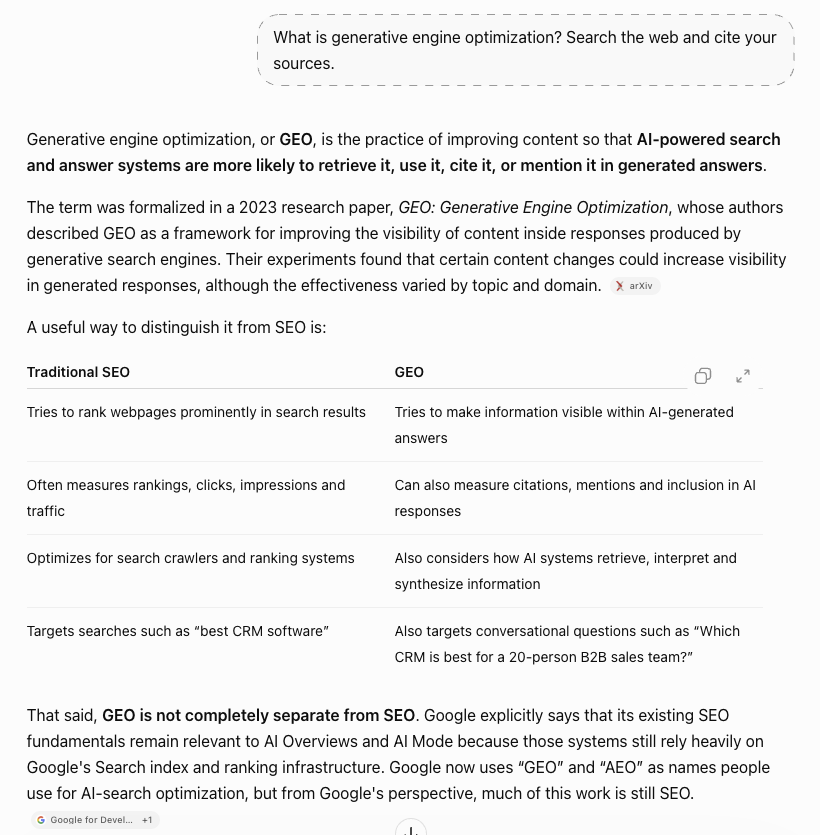
ChatGPT 回答英文問題『What is generative engine optimization? Search the web and cite your sources.』,並列出 arXiv 和 Google for Developers 的來源連結。
畫面中的英文問題為『What is generative engine optimization? Search the web and cite your sources.』。2026 年 9 月 29 日的 ChatGPT 回答,附有 arXiv 和 Google for Developers 的來源連結。每一輪都要把答案和來源存起來。

一項研究分析了 2025 年美國的搜尋:研究人員在兩個月後再搜尋同樣的問題,發現 Google AI 摘要引用的網頁只有 18% 兩次都出現,一般搜尋結果則有 45%(Findings of ACL 2026)。在這項研究中,Google AI 摘要引用的網頁比一般搜尋結果變動更大,所以我們每個月都會檢查一次 AI 摘要引用了哪些網頁。

常見問題

資料來源

  1. Google Search Central,「Optimizing your website for generative AI features on Google Search」。最後更新於 2026 年 7 月 10 日。https://developers.google.com/search/docs/fundamentals/ai-optimization-guide
  2. Google Search Central,「Latest Google Search Documentation Updates」。參見 2026 年 5 月 15 日及 6 月 15 日的條目。https://developers.google.com/search/updates
  3. Google Search Central,「AI features and your website」。最後更新於 2025 年 12 月 10 日。https://developers.google.com/search/docs/appearance/ai-features
  4. Google Search Console Help,「Search generative AI control」。2026 年 9 月 30 日閱覽。https://support.google.com/webmasters/answer/16908024
  5. Google Search Console Help,「Generative AI performance report (Search)」。2026 年 9 月 30 日閱覽。https://support.google.com/webmasters/answer/16984139
  6. OpenAI,「Overview of OpenAI Crawlers」。2026 年 9 月 30 日閱覽。https://developers.openai.com/api/docs/bots
  7. Ruhr University Bochum、UA Ruhr Research Center 及 Max Planck Institute for Software Systems,「Characterizing Web Search in The Age of Generative AI」。Findings of ACL 2026。https://aclanthology.org/2026.findings-acl.526.pdf
  8. Princeton University 及 IIT Delhi,「GEO: Generative Engine Optimization」。KDD 2024。https://arxiv.org/abs/2311.09735
  9. Anthropic,「Does Anthropic crawl data from the web, and how can site owners block the crawler?」。2026 年 4 月 7 日更新。https://support.claude.com/en/articles/8896518-does-anthropic-crawl-data-from-the-web-and-how-can-site-owners-block-the-crawler
  10. Perplexity,「Perplexity Crawlers」。2026 年 9 月 30 日閱覽。https://docs.perplexity.ai/docs/resources/perplexity-crawlers
  11. Google Search Central,「Introduction to structured data markup」。https://developers.google.com/search/docs/appearance/structured-data/intro-structured-data
  12. Microsoft Advertising,「Optimizing your content for inclusion in AI search answers」。https://about.ads.microsoft.com/en/blog/post/october-2025/optimizing-your-content-for-inclusion-in-ai-search-answers
  13. Google Search Central,「Structured data markup that Google Search supports」。2026 年 6 月 15 日更新。https://developers.google.com/search/docs/appearance/structured-data/search-gallery

Tandra AI 是我們自主研發的 AI 工作平台(AI workspace)。您可以把這十項檢查寫進 Tandra AI;平台上的 AI Agent 起草每一頁時,便可以按這十項來寫。

免費 GEO 檢查

查看 ChatGPT 和 Google AI 摘要有沒有提到您的品牌

想知道 AI 回答有沒有提到您的品牌?我們會檢查 ChatGPT 和 Google AI 摘要的答案,再把結果整理成報告送給您,費用全免。

取得免費 GEO 檢查
分享這篇文章 LinkedIn Facebook
所有文章
Scroll to Top